CO2IN — Product Positioning & Website Redesign

CO2IN — Product Positioning & Website Redesign

Brought in to redesign a website. Ended up facilitating a company-wide conversation about what the product actually was — and building the website that made the answer real.

Brought in to redesign a website. Ended up facilitating a company-wide conversation about what the product actually was — and building the website that made the answer real.

CONTEXT

Climate tech startup · carbon emission allowances · Czech Republic · 2023 · 5 months

CleanTech startup — carbon emissions platform, Czech Republic, 2023

SCOPE

Strategy · Product Positioning · Content Strategy ·
IA · UX Design

Strategy · Product Positioning · Content Strategy · IA · UX Design · 5 months

Table of Contents

01 — What I walked into

02 — The question nobody had answered

03 — What I actually did

04 — Part 01: I made the organisation answer the hard question

05 — Part 02: I delivered the product that held both answers

06 — What shipped

07 — What this kind of work requires

The brief

I was brought on board to help with marketing and UX.

I was brought on board to help with marketing and UX.

The website was old. Something needed to change. That was about it.

The teacher platform was too complicated. Teachers weren't using it the way it was designed. Find what's broken. Fix it.

Step one

I started where I always start.

I started where I always start.

Not with the screens. With the people inside the company.

Not with the screens. With the people inside the company.

What I found

The answer to "what is CO2IN?" depended on who in the company you asked.

Each answer was internally consistent. Each one pointed in a different direction.

Three different realities. Each one internally consistent. Each one pointing in a different direction.

The product owner and the graphic designer:

C2C. Environmental niche. Crypto framing. CO2IN was a product for individuals who cared about the planet and understood blockchain. They'd built it. They believed in it.

C2C. Environmental niche. Crypto framing. CO2IN was a product for individuals who cared about the planet and understood blockchain. They'd built it. They believed in it.

The growth manager

CO2IN was a corporate ESG tool. A solution for companies navigating sustainability reporting, employee benefits, and the pressure to be seen as responsible. Individuals weren't the market. Corporations were.

CO2IN was a corporate ESG tool. A solution for companies navigating sustainability reporting, employee benefits, and the pressure to be seen as responsible. Individuals weren't the market. Corporations were.

The ceo / owner

No clear position on B2B or B2C. Present enough to matter. Not engaged enough to lead.

No clear position on B2B or B2C. Present enough to matter. Not engaged enough to lead.

The real problem

Each stakeholder group had a different answer to the same question: what is CO2IN?

Each stakeholder group had a different answer to the same question: what is CO2IN?

Who it was CO2IN for? What it stood for? What it said to each audience?

None of that had been worked out yet.

Who it was CO2IN for? What it stood for.? What it said to each audience?


None of that had been worked out yet.

Reframe

No amount of redesign could solve a product that hadn't decided what it was yet.

Before anything could be built, that question had to be answered inside the company first.

No amount of redesign could solve a product that hadn't decided what it was yet.

Before anything could be built, that question had to be answered inside the company first.

That became my first job — bringing a fragmented team to a shared understanding of what they were actually building.

That became my first job — bringing a fragmented team to a shared understanding of what they were actually building.

So I worked on two things. In order.

01

I facilitated the internal conversation about what CO2IN actually was

02

I delivered the website that made the answer real

01 I facilitated the internal conversation about what CO2IN actually was.

01 I diagnosed the strategic gap.

What made it hard

This was the hardest part of the project.

Not technically. Organisationally. The people with the right strategic instincts, the growth manager, had no authority to close the question. The person with authority, the owner, wasn't engaged enough to close it either. And the legacy team, the product owner, the graphic designer, were anchored to the original vision and resistant to letting it go.

What I did to solve it

I ran a structured positioning session with the full team.

Not a session about design. A session about product definition.

I put the question on the table directly:

Are we a B2B ESG solution, a B2C green currency, or both?

Are we a B2B ESG solution, a B2C green currency, or both?

Because the answer determines everything — the audience, the message, the information architecture, the website.

The resolution

The answer the team landed on: both. But not as one undifferentiated thing.

B2B: CO2IN as an effective, simple offset solution for responsible companies.

B2C: CO2IN as a green currency for anyone who wants to reduce emissions.

Shared positioning across both: CO2IN is how you fight climate change. Not invest in it. The crypto framing which had defined the product from the beginning was explicitly retired.

Without these, Foxino could never be a planning tool — regardless of how the interface looked.

The team agreed on a product definition:

The team agreed on a product definition:

"CO2IN are certified voluntary carbon credits that allow anyone to credibly offset their greenhouse gas emissions."

"CO2IN are certified voluntary carbon credits that allow anyone to credibly offset their greenhouse gas emissions."

02 I delivered the website
that made the answer real

02 I delivered the website
that made the answer real

The research

I didn't run the research myself. An external company had already mapped the existing users. I used it to define who our audiences actually were their motivations, their language, their hard nos.

B2B: financial managers, HR managers. ESG compliance, employee benefits, corporate responsibility. Crypto hard no. B2C: environmentally conscious individuals. Personal carbon responsibility, contributing to change.
Crypto — also hard no.Both audiences needed CO2IN to move away from its original identity completely.

The IA problem

The hardest design challenge wasn't visual.

It was information architecture.

How do you build a single website that serves two audiences with different motivations, different language, different needs — without losing either of them?

The process

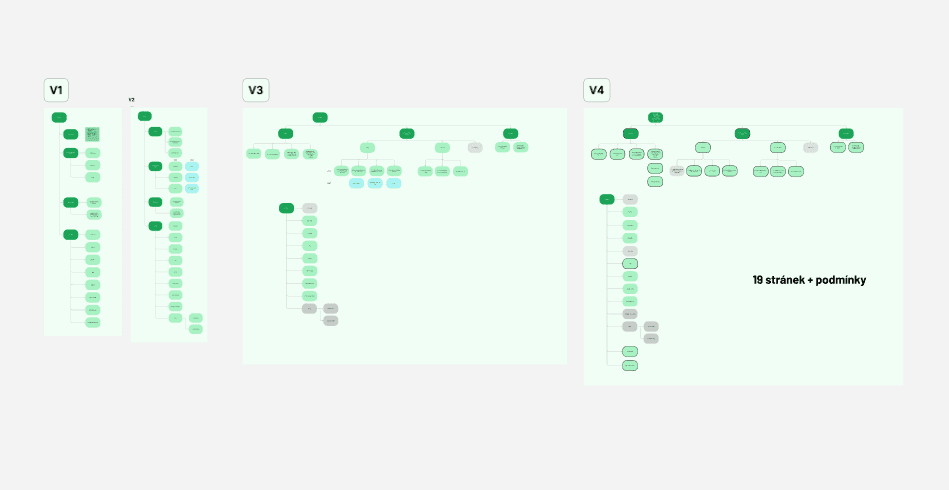
Five versions of the site map.

Not because the design was unclear. Because the product definition kept evolving as the internal conversations moved forward.

Each version incorporated new decisions from the team. Each version got closer to something the whole organisation could stand behind.
What I built

I didn't just design wireframes.

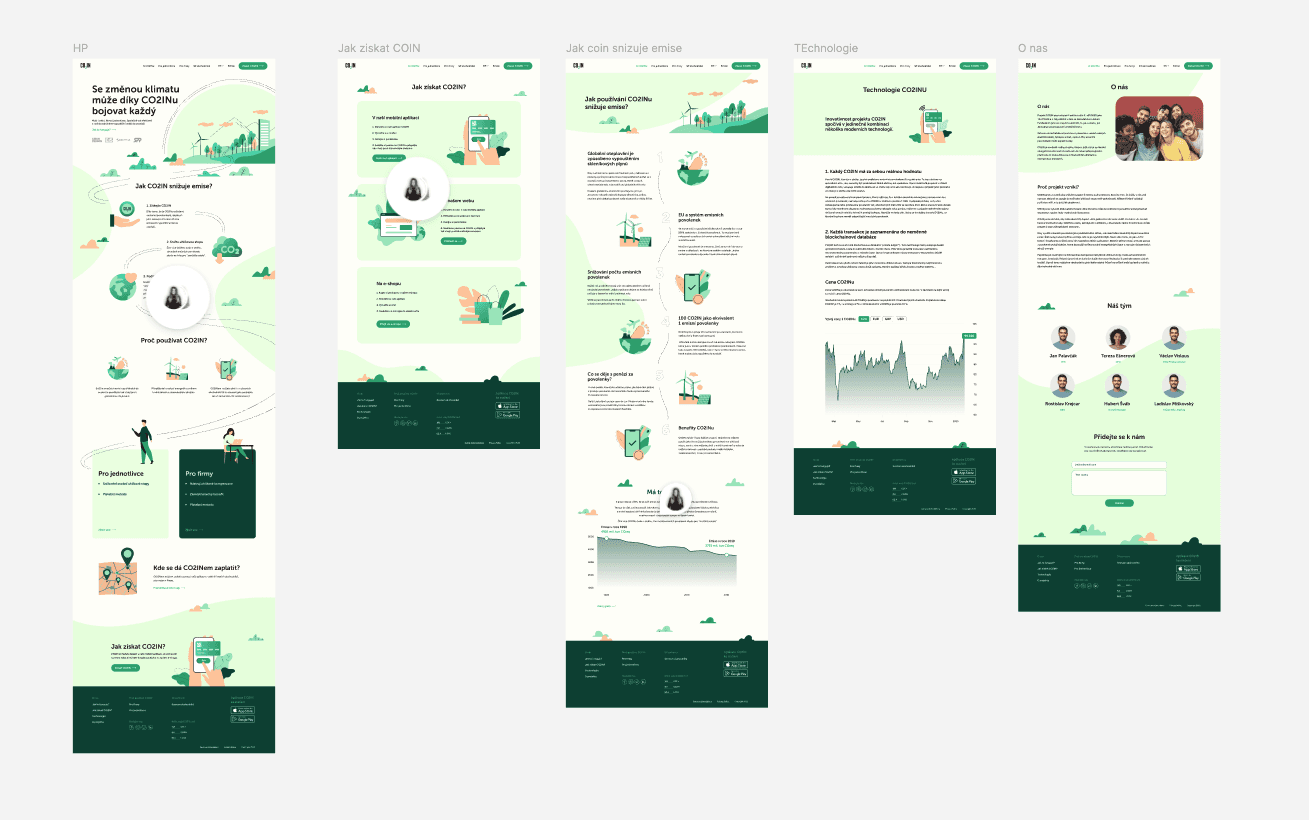
I wrote the content. I defined the product's key characteristics alongside the team. I created the IA that separated the two audiences clearly — so each could find exactly what they needed without confusion.

I didn't just design wireframes.

I wrote the content. I defined the product's key characteristics alongside the team. I created the IA that separated the two audiences clearly — so each could find exactly what they needed without confusion.

Then I managed the external agency handling UI and development. Feedback, quality control, responsiveness, launch. I was there for all of it.

Then I managed the external agency handling UI and development. Feedback, quality control, responsiveness, launch. I was there for all of it.

What shipped

The website launched.

It serves two distinct audiences on a single platform. It speaks to corporate ESG buyers in their language. It speaks to individual climate advocates in theirs. It doesn't mention crypto once.

The product definition that made this possible didn't exist before I arrived.

Honest impact

Honest impact

The project eventually wound down — the growth manager who had driven the pivot left, and funding didn't come through for the next phase.

The project eventually wound down — the growth manager who had driven the pivot left, and funding didn't come through for the next phase.

The website is still live. It still reflects the strategy.

The website is still live. It still reflects the strategy.

What I can say:

The question the company had been avoiding — what are we, actually? — got answered. That answer is visible in every page of the site.

What I can say:

The question the company had been avoiding — what are we, actually? — got answered. That answer is visible in every page of the site.

What this kind of work
requires.

What this kind of work requires.

The diagnos is problem

Most companies don't know they have a product definition problem.

They think they have a website problem. Or a conversion problem. Or a messaging problem.

The symptoms are real. The diagnosis is wrong.

What it actually takes

Getting to the real problem requires someone who can hold a strategic question — what is this product, and for whom? — while also navigating the internal dynamics of an organisation that hasn't agreed on the answer yet.

Someone who can sit with ambiguity long enough to surface the real tension. Then turn that tension into something concrete.

Someone who can facilitate the conversation and then build what the conversation produced.

My thinking is the product. Figma is how it becomes real.

Contact

Let's work together

Sometimes the problem isn't what it looks like. If you're stuck, I can help you figure out what's actually going on — and what to do about it.

Contact

Let's work together

Sometimes the problem isn't what it looks like. If you're stuck, I can help you figure out what's actually going on — and what to do about it.

sarka Kortanova

sarka Kortanova

© 2026 / All rights reserved